Why Is My Electrical Outlet Not Working in Greeley, CO? 7 Common Causes
An electrical outlet that stops working is usually caused by a tripped circuit breaker, tripped GFCI outlet, loose wiring, a damaged receptacle, an overloaded circuit, or another electrical connection problem.
If your outlet has no power but the breaker is not tripped, the problem may be somewhere else on the circuit. Start with a few safe troubleshooting checks. If power cannot be restored or you notice signs of electrical damage, contact a qualified electrician.
AC-DC Electric provides professional electrical outlet repair and troubleshooting in Greeley, CO, helping homeowners identify electrical failures and restore safe, reliable power.
A dead electrical outlet doesn't always mean you need a new receptacle. The problem may involve an upstream GFCI, hidden wiring connection, circuit breaker, or another electrical component.
Understanding the symptoms can help you determine what to check, what the problem might be, and when professional electrical repair is necessary.
What Should I Check First When an Electrical Outlet Stops Working?
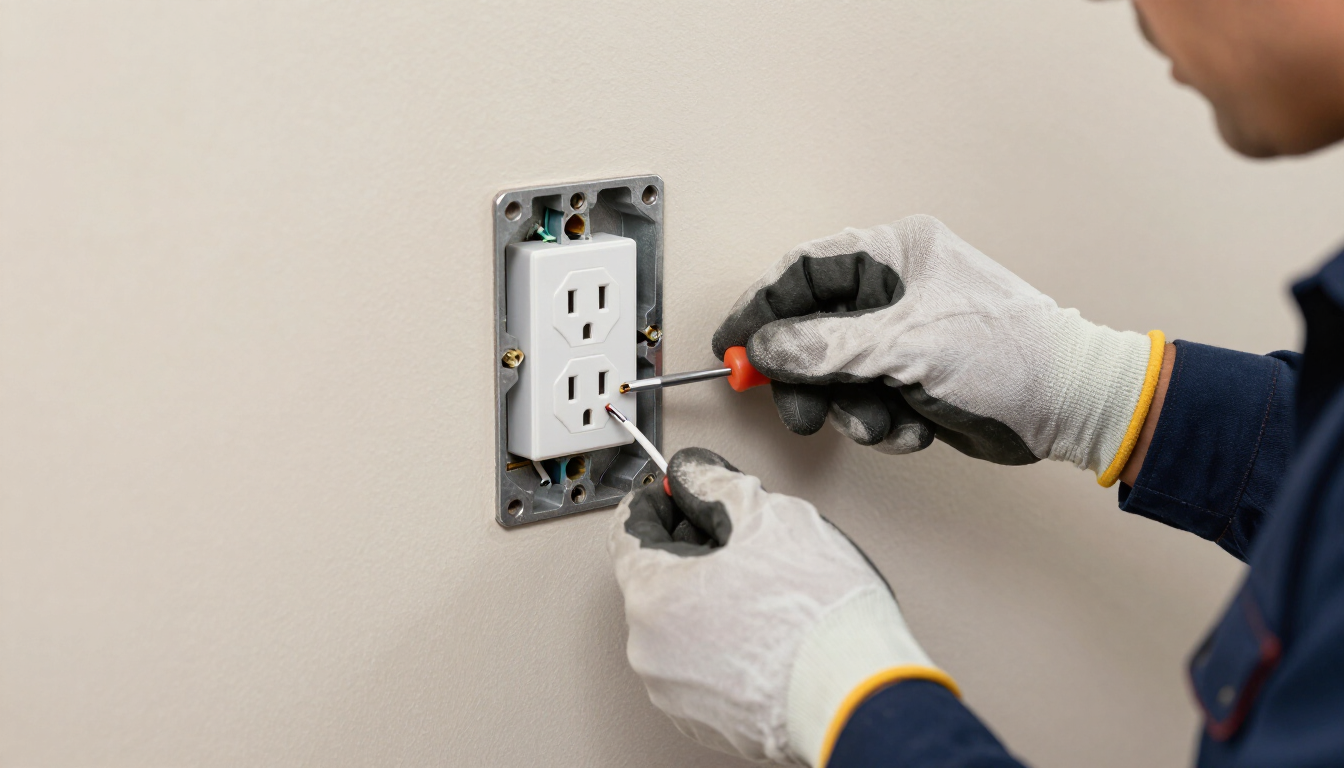
Before assuming your outlet needs replacement, a few simple checks may help identify the problem.
Follow these five safe troubleshooting steps:
- Check nearby outlets. Determine whether one outlet or several outlets have lost power.
- Test the appliance. Plug the device into another known-working outlet to determine whether the appliance itself is faulty.
- Look for a tripped GFCI outlet. A GFCI elsewhere on the circuit may be protecting the dead outlet.
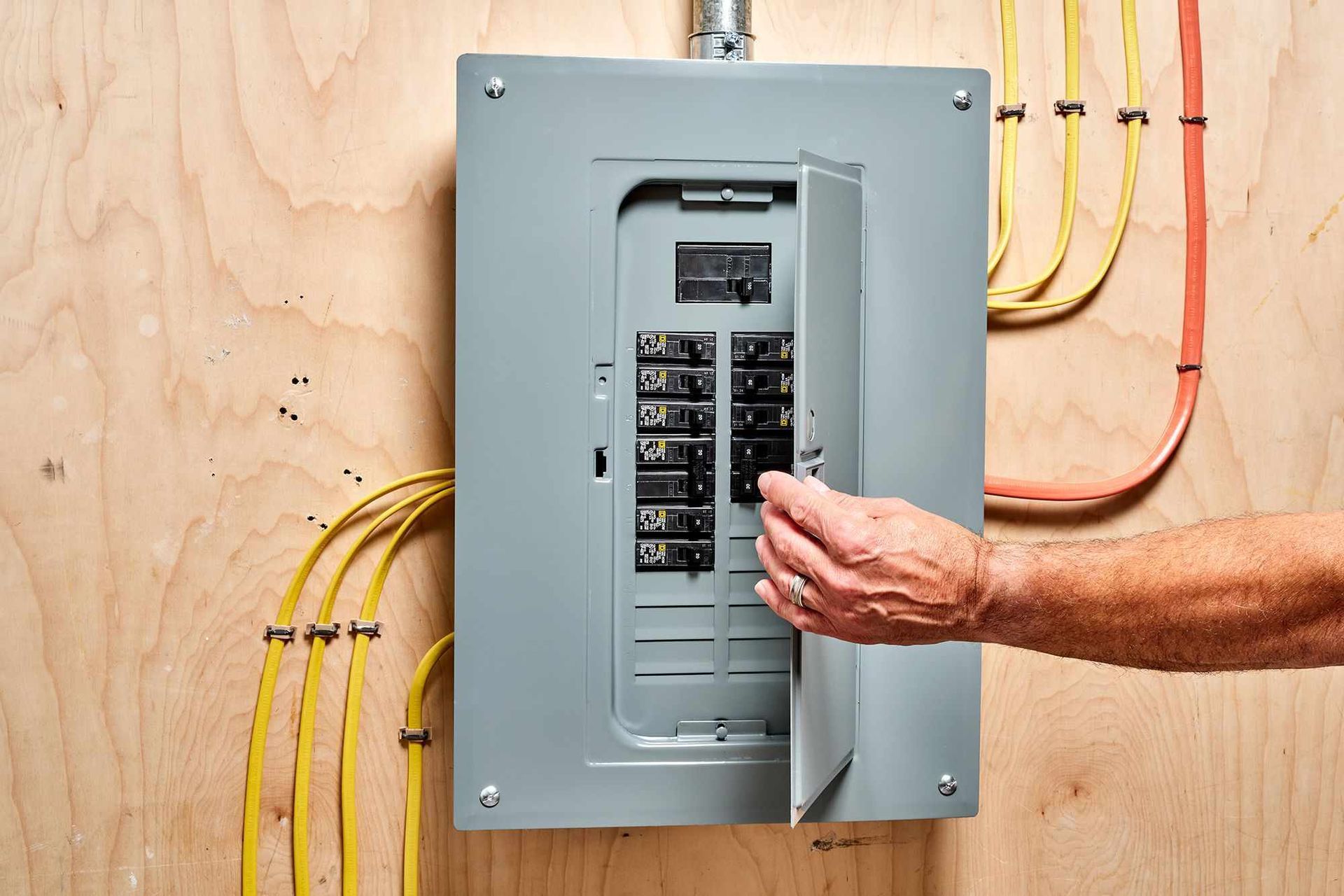
- Check the circuit breaker. Look for a tripped breaker. If there are no indications of damage, follow the manufacturer's instructions for a single reset.
- Look for warning signs. Unusual heat, buzzing, discoloration, sparks, or burning odors can indicate electrical hazards.
If the outlet remains without power after these checks, the problem may require professional electrical testing.
Safety warning: Never remove an electrical outlet, touch exposed wiring, or open an electrical panel cover to troubleshoot a dead receptacle.
If you notice smoke, overheating, or signs of electrical arcing, stop using the affected equipment and seek immediate assistance.
1. Tripped Circuit Breaker
A tripped circuit breaker is one of the most common reasons an outlet suddenly loses power.
Circuit breakers protect electrical wiring by interrupting power when excessive current or certain electrical faults occur.
Common causes include:
- Overloaded electrical circuits
- Short circuits
- Ground faults
- Defective appliances
- Damaged electrical wiring
How to identify it: Multiple outlets or lights may lose power simultaneously.
How to solve it: A breaker may be reset once according to the manufacturer's instructions when no hazard is apparent. If it trips again, an electrician should inspect the circuit to identify the cause.
2. Tripped GFCI Outlet
A GFCI outlet is designed to reduce the risk of electrical shock by shutting off power when it detects a ground fault. GFCI protection is common in bathrooms, kitchens, garages, laundry areas, and outdoor locations.
One important fact homeowners often overlook is that a single GFCI outlet can protect several other electrical outlets.
How to identify it: An outlet has no power, but the circuit breaker appears normal. Another GFCI on the circuit may have tripped.
How to solve it: Check accessible GFCI outlets and follow their reset instructions when safe.
If the GFCI repeatedly trips or refuses to reset, professional troubleshooting may be necessary.
3. Loose Electrical Wiring Connections
Loose electrical connections can interrupt power to an outlet or cause electricity to flow intermittently.
These problems can develop from aging components, improper installation, or deteriorating connections.
Warning signs include:
- An outlet that works sometimes but not others
- Buzzing or crackling noises
- Warm electrical receptacles
- Burning odors
- Discolored outlet covers
How to identify it: The outlet may work intermittently or show signs of overheating.
How to solve it: A qualified electrician must locate and repair the faulty electrical connection. Loose wiring can create dangerous heat or electrical arcing.
4. Damaged or Worn-Out Electrical Outlet
Electrical outlets can wear out after years of repeated use.
The internal contacts that hold plugs securely may become worn, damaged, or unable to maintain a reliable electrical connection.
Common signs of a bad outlet include:
- Plugs fitting loosely
- Cracked or broken receptacles
- Visible discoloration
- An outlet that stops supplying power
- Intermittent electrical operation
How to identify it: One receptacle may have problems while nearby outlets continue operating normally.
How to solve it: An electrician can inspect and test the receptacle. If the outlet is defective, replacing it with an appropriately rated device may restore reliable power.
5. Overloaded Electrical Circuit
An overloaded electrical circuit occurs when connected equipment draws more current than the circuit is designed to safely carry.
This frequently happens when multiple high-demand appliances operate simultaneously.
Examples include:
- Portable space heaters
- Microwaves
- Hair dryers
- Portable air conditioners
- Workshop equipment
- Other high-wattage devices
How to identify it: Outlets lose power after several appliances begin operating, often because the circuit breaker trips.
How to solve it: Reduce the electrical load. If the problem continues, a professional electrician can evaluate the circuit and determine whether repairs or an additional dedicated circuit are appropriate.
6. A Faulty Connection Elsewhere on the Circuit
Sometimes the dead outlet is not the source of the problem.
Several receptacles may share wiring connections along the same branch circuit. If a connection fails, outlets farther along the circuit may stop receiving power.
For example:
- One bedroom outlet works while another doesn't.
- Several kitchen receptacles lose power.
- Two garage outlets stop working simultaneously.
- Some outlets remain powered even though others on the circuit are dead.
How to identify it: Multiple outlets lose power, but the breaker is not visibly tripped.
How to solve it: Professional electrical testing can identify the failed connection or damaged section of wiring. Repairing the actual fault can restore power to the affected outlets.
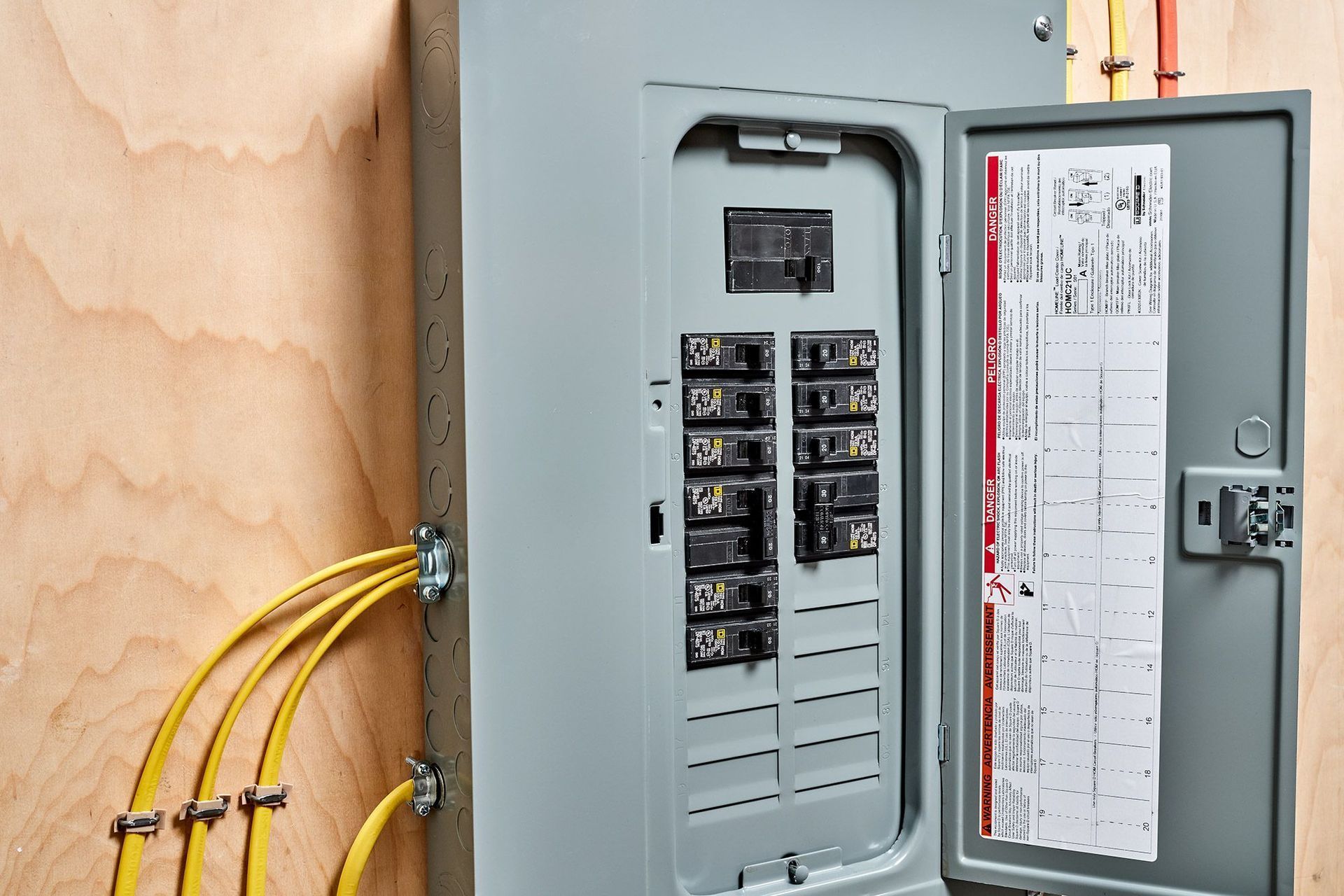
7. Faulty Circuit Breaker or Electrical Panel Component
A defective breaker or another electrical panel issue can prevent power from reaching an outlet.
Although not every dead outlet indicates a panel problem, breaker defects and damaged connections should be considered when simpler explanations have been ruled out.
Possible problems include:
- Defective circuit breakers
- Loose electrical connections
- Damaged conductors
- Overheated panel components
How to identify it: Outlets remain without power despite basic checks, or multiple circuits have unusual electrical symptoms.
How to solve it: An electrician can inspect and test the electrical system to determine whether a breaker repair, circuit correction, or panel-related service is necessary.
A complete electrical panel replacement is not automatically required.
An outlet may have no power even when the breaker is on because a GFCI has tripped, the receptacle has failed, or a wiring connection has interrupted electricity somewhere along the circuit.
This is an especially frustrating problem because the electrical panel may appear normal.
For example, a loose connection at one receptacle can interrupt power to another outlet farther along the circuit.
A faulty GFCI protecting several outlets can cause similar symptoms.
If the breaker appears normal and the GFCI protection has been checked, an electrician can test the circuit to find where electrical power is being interrupted.
Why Is One Electrical Outlet Not Working but the Others Are?
When only one electrical outlet stops working, the problem may be isolated to the receptacle or its wiring connections.
Possible causes include:
- Worn receptacle contacts
- A loose electrical connection
- Damaged wiring
- A tripped upstream GFCI
- An open connection affecting that part of the circuit
The fact that nearby outlets have power does not mean the dead outlet is safe or that its receptacle is necessarily defective.
A professional electrical inspection can determine whether the problem requires outlet replacement or wiring repair.
If several outlets stop working at the same time, they may share a common electrical circuit or protective device.
The most likely causes include a tripped circuit breaker, tripped GFCI, overloaded circuit, or faulty upstream electrical connection. For example, several bedroom receptacles might lose power because a shared branch circuit has developed an electrical fault.
When multiple outlets fail together, replacing each outlet is rarely the right first step.
The underlying circuit needs to be evaluated to determine why power is not reaching the affected receptacles.
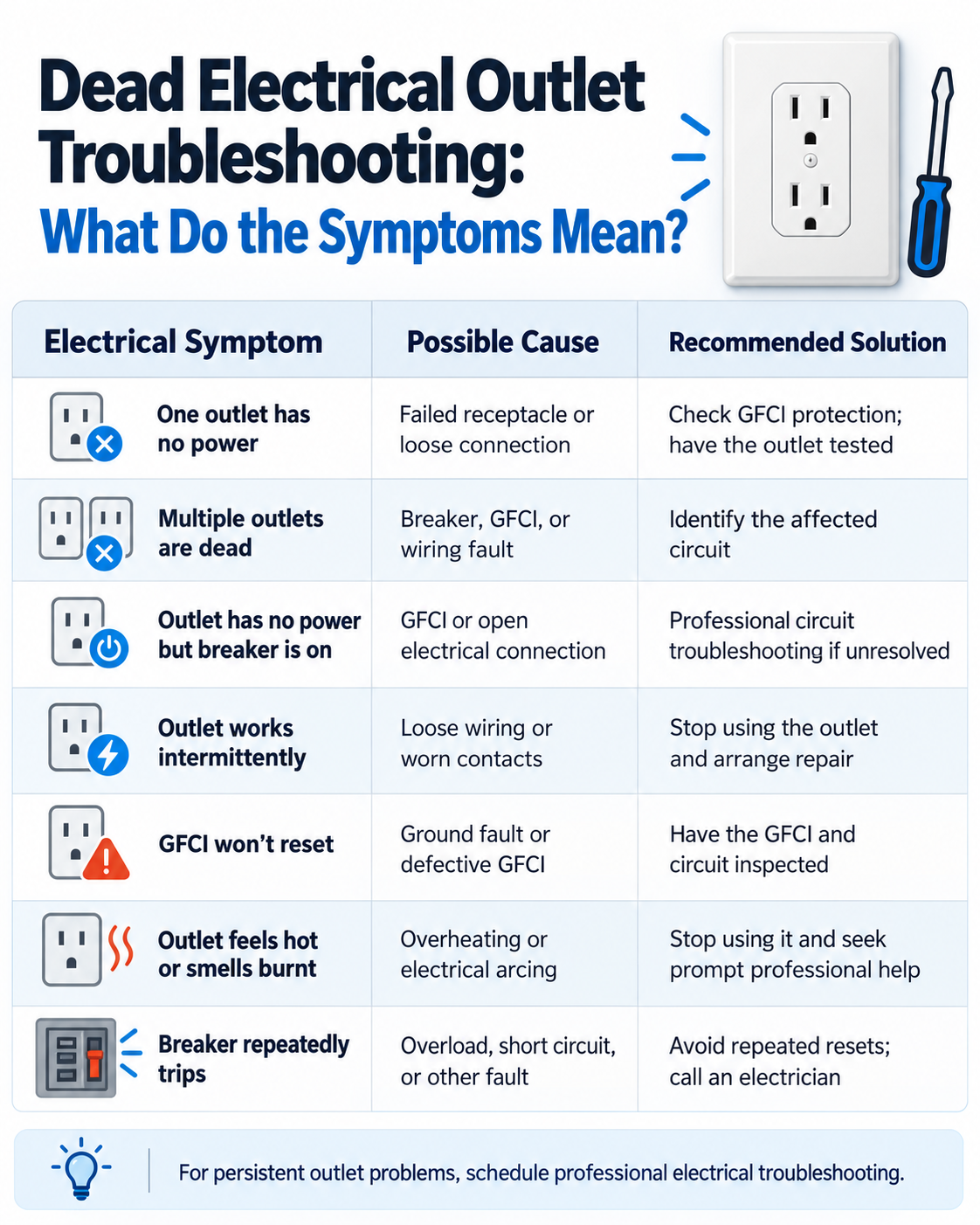
Some electrical outlet problems can be traced to a tripped breaker or GFCI. Others indicate conditions that require professional electrical repair.
Contact an electrician if:
- An outlet remains dead after safe basic checks
- A circuit breaker repeatedly trips
- A GFCI won't reset
- Multiple outlets have lost power
- An outlet works intermittently
- The receptacle is damaged or discolored
- You notice buzzing, sparks, or unusual heat
Electrical problems involving overheating, burning odors, or visible sparks require urgent attention.
Never attempt to repair exposed wiring or electrical panel components without the appropriate qualifications.
AC-DC Electric provides professional electrical troubleshooting in Greeley, CO to identify electrical faults and recommend the appropriate repair.
Frequently Asked Questions About Electrical Outlets Not Working
Can an electrical outlet stop working without tripping a breaker?
Yes. A failed receptacle, tripped GFCI, loose connection, or open circuit can interrupt power without causing the breaker to trip. Electrical testing can identify where power is being lost.
Why does my outlet have no power but the breaker is on?
The problem may involve upstream GFCI protection, a damaged electrical outlet, or faulty wiring. A breaker being on does not guarantee every receptacle on the circuit is receiving power.
Can a bad outlet cause other outlets to stop working?
Yes. If an electrical connection at one receptacle fails, other outlets connected downstream may lose power. An electrician can locate and repair the faulty connection.
Why does my GFCI outlet keep tripping?
Repeated GFCI tripping may indicate moisture, a ground fault, a defective appliance, wiring problems, or a faulty GFCI device. Persistent tripping should be investigated rather than repeatedly resetting the device.
Is a dead electrical outlet a fire hazard?
A dead outlet is not automatically a fire hazard, but loose wiring, damaged connections, and overheating can be dangerous. Burning smells, discoloration, and unusual warmth require prompt professional attention.
Should I replace an outlet that suddenly stopped working?
Not necessarily. The outlet may be functional while another problem prevents electricity from reaching it. An electrician can determine whether the receptacle needs replacement or the circuit requires repair.
Title or Question
Describe the item or answer the question so that site visitors who are interested get more information. You can emphasize this text with bullets, italics or bold, and add links.How much does dead outlet repair cost in Greeley, CO?
The cost depends on whether the problem involves a receptacle replacement, GFCI repair, damaged wiring, or electrical circuit troubleshooting. A professional evaluation can identify the repair needed and provide an appropriate estimate.
Whether one outlet has stopped working or several receptacles have lost power, our electricians can evaluate the problem and recommend the appropriate solution.
When an electrical outlet stops working, identifying the underlying cause is the first step toward restoring safe, dependable power.
AC-DC Electric provides residential electrical troubleshooting and repair services in Greeley, CO and surrounding Northern Colorado communities.
Our electrical services include:
- Dead electrical outlet repair
- GFCI troubleshooting and replacement
- Electrical receptacle installation
- Electrical wiring diagnostics
- Circuit breaker troubleshooting
- Electrical switch and outlet repair
- Electrical panel inspections and upgrades
Whether one outlet has stopped working or several receptacles have lost power, our electricians can evaluate the problem and recommend the appropriate solution.
Schedule Electrical Outlet Repair in Greeley, CO
Electrical outlet not working in your home?
Don't ignore repeated power interruptions, damaged outlets, or GFCI problems.
AC-DC Electric helps Greeley homeowners identify electrical issues and restore safe, reliable power.
Call AC-DC Electric at 970-330-1656 to schedule professional electrical outlet troubleshooting or repair in Greeley, CO.
Visit
www.acdc-electric.com to learn more about our residential electrical services.
You might also like